Monday, November 10, 2014

German Identity

The German identity changed rapidly during the 20th century. Germans found themselves constantly having to change their self-image and concept, as the world around them changed and forced them to alter their perceptions of identity. From its earliest history, the people who viewed themselves as Germanic have been resilient in their path to finding a unified identity, and encountered many small steps along the way that slowly constructed the idea of "German". With the unification of Germany in 1871, this journey took a very sudden leap forward. Suddenly, an area that was once comprised of a number of small, independent kingdoms became a unified nation under a monarch. For the Germans, this created a new sense of belonging because for the first time in their history they were united as one nation. This sense of pride was challenged when World War I broke out. When Germany was on the losing side of the war, it truly crushed the people's self-concept. Furthermore, the severe punishment set forth by the Treaty of Versailles only made the situation worse. As the "aggressors", Germany was forced to pay heavy reparations and soon found itself completely bankrupt. The resulting hyper-inflation that plagued the Weimar Republic greatly damaged the nation's sense of pride and one resounding cry was, "If we are so great, then why are things so bad?"  The resulting effect was that Germans lost faith in both their government and themselves, meaning that once again, Germans were struggling to find an identity. Before, they could look to the head of the monarchy as symbol of German values and integrity, but with how poorly things were going in the country at the time, they could not look to their new democratic government with the same feeling. As a result, they begin looking for other sources of unification.
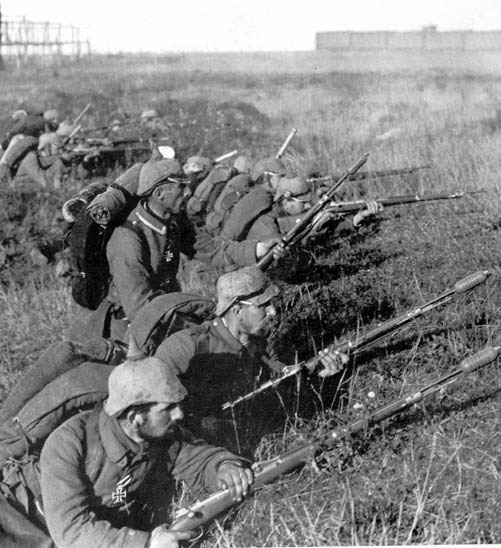


German soldiers in World War I. 


Hyper inflation in the Weimar Republic made paper money worthless. 


          Adolf Hitler recognized the Germans’ anger with the government for the war and for how poorly things were, and focused his rise to power on those ideas. For the Germans, having a new source of inspiration to look at as a symbol of German identity caused many to regain hope in the country. It wasn’t so much that they necessarily agreed with everything Hitler said, but having blamed assigned to a group for all of Germany’s problems was easy to along with. Germans in the 1930s were not bad people; they were just desperate for someone to solve their problems. The rise of the Third Reich once again restored the Germans faith in themselves and their country, and made them proud once again to be Germans. It’s easy for us to condemn them nearly a century later, but considering everything they had gone through it’s understandable—scary, but understandable.


Adolf Hitler's passionate speeches captivated many. 


Hundreds of thousands came out for his rallies. 


          Once again, war destroyed the Germans sense of identity. After World War II, however, things were much worse. Extreme loss of life and the destruction of their country, along with the psychological effects of losing another war, caused Germans to feel completely lost and abandoned. Literature of the time reflected this notion, noticeably in what was known as “debris literature”, which reflected both the physical and mental destruction of Germany. It wasn’t until the early 1950s that the country was able to start improving, and even then had to deal with the founding of East Germany.


Entire cities were completely destroyed during World War II. 


          Even in modern times, German identity is still being forged. Since the fall of Hitler and the Third Reich, patriotism and outward national pride have been avoided, so not to make the same mistakes again. As a result, German identity is still very difficult to define. But even though the Germans may not demonstrate their national identity the same way we might do so in America—flag waving, chanting, singing, etc.—they still have sense of pride that cannot be ignored. By taking ownership for their past and accepting the responsibility as a nation, Germany has demonstrated perhaps the most important qualities of their national identity. 


Wednesday, October 22, 2014

Founding of the German State

            The modern German state as we know today is largely a product of relatively recent events, including the fall of the Berlin Wall in 1989. However, the roots of the German nation and identity were formed several hundred years before during the time of the Holy Roman Empire. As the reading indicates, when the empire was officially dissolved in the early 19th century and reorganized by Napoleon as the Confederation of the Rhine, the path towards a German nation was set amidst the clash of nationalism and liberalism. After the defeat of Napoleon in 1815, Germany was organized into the German Confederation. People living there began to feel increasingly nationalistic and wished to unify the German states in order to make them stronger and more resistant against foreign attacks, which lead to revolts in 1848. At the same time, the state of Prussia had become increasingly powerful throughout the 18th and 19th centuries, and would have a tremendous impact on the development of the German state.


Depiction of 1848 revolts. 


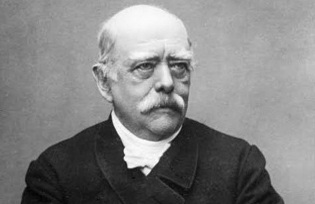
            One central figure that comes to mind when considering German unification is Otto von Bismarck. As a Prussian minister, Bismarck had tremendous influence on German politics at the time and strongly advocated for a unified Germany throughout the 1850s and 1860s. Through aggressive diplomacy, including his famous “Blood and Iron” speech, and various military exploits, primarily against Denmark, Austria, and, ultimately, France, Bismarck furthered Prussia’s strength and status on the world stage and demonstrated the benefits of a unified Germany. The aforementioned war with France, the Franco-Prussian war, was a result of tensions between the two countries, including resentment over French occupation of German lands during the Napoleonic wars. France was ultimately defeated in September of 1870, and Germany was officially unified in 1871 with Wilhelm I as Kaiser.


Otto von Bismarck


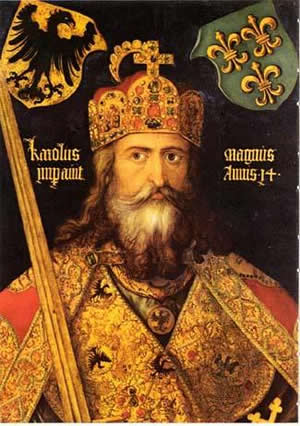
            A necessary component of the path towards German unification was the need for a German identity. Due to the vast number of German states, each with unique customs and culture, finding a sense of national pride and unity proved difficult for much of Germany’s early history. However, even at the very beginning of the Middle Ages, people living in German-speaking lands began to find a sense of identity. In fact, language itself played a pivotal role in uniting Germans. Chlodwig, the first German king, began making his people speak the same dialect of German when he was corwned in the 5th century. A common language proved highly effective in establishing the first sense of what it meant to “German”. Other kings, notably Charlemagne, went on to exert their influence on the shaping of the German identity as well. For example, Charlemagne’s creating of the Holy Roman Empire created a sense of German pride, and, although the Empire included lands other than the modern German state, it became a symbol of pride for the Germans and was the first large, unifying power they were a part of.


Karl the Great, or Charlemagne


            Martin Luther also had a tremendous impact on German identity through his fueling of the Protestant Reformation. By both translating the Bible into German and demonstrating that people can fight against an unjust central power, Luther, rather indirectly, encouraged Germans to resist injustice and stand up for their fundamental rights. Protestantism, along with its ideals, is an extremely important aspect of German identity to this day and still influences how the people of Germany react to and view the world.


Martin Luther


            As Americans, we can somewhat relate to complicated story of finding a national identity. Though Germany was inhabited long before the United States was settled by Europeans, the fact it only became a modern state in the late 19th century shows that its identity as a country is just complex as ours. We too had to combine a melting pot of different cultures and beliefs, and combine that with shared beliefs and experiences to create our identity. And, like the Germans, events that happened long before our lifetimes still have an impact on our identity, whether we’re aware of them or not.  


Friday, September 12, 2014

Berlin

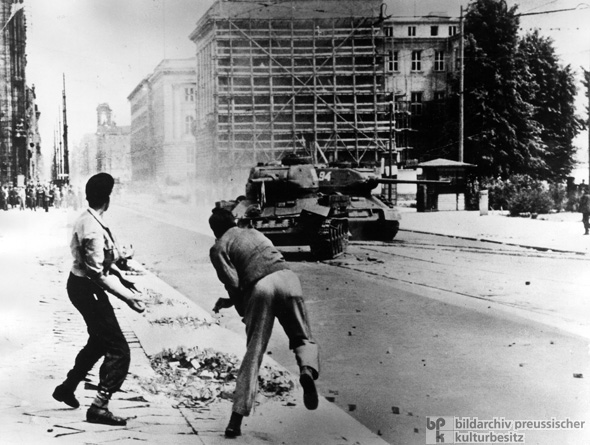
Ever since last spring’s class when we devoted a great deal of time to the subject, I’ve been fascinated by the uprisings on June 17th, 1953 in East Germany to the oppression of socialism. Berlin as a divided city is a subject I’m certain many of my peers will choose to explore, but this event in particular is one most interesting to me. Although the movements themselves originated outside the city, the culmination of the movement occurred in Berlin, where thousands marched against soldiers and tanks. Many more were arrested and either sentenced to death or Siberian concentration camps. West Berliners met many of the protesters as they made their way through West Berlin, and the event was widely covered and supported in West Germany. What was surprising as I learned about this movement, along with its causes and consequences, was how I had never even heard of it before we covered it in class. Considering how well known the Berlin Wall is in modern culture, it’s amazing that Americans aren’t more familiar with this uprising. A popular resistance against an oppressive regime should ring all too familiar for those of us even just casually versed in American history, but unfortunately the events of that June day remain yet another nearly forgotten historical event for many of us. I would hypothesize that fewer people than ideal are familiar with the movement because it wasn’t responsible for the downfall of socialism in East Germany. Often times, our cut and dry culture of wins and losses views history too stringently and doesn’t consider greater significance when observing a historical event. Maybe if more people understood the stakes of the resistance and what it meant for both East Germans and the SPD (the ruling party of East Germany) at the time, they would have a greater appreciation for the event. I’m already looking forward to visiting the spot in Berlin where thousands of people marched in support of freedom despite the danger and certain 
consequences.


Protesters on June 17th attempt to take on a Russian tank. 


East Germans march into Berlin.


            Another topic that interests me about Berlin was its role at the end of World War II. This was yet another topic covered in a class last year that I wasn’t terribly familiar with. When the army invaded the city during the last days of the wars, the citizens of Berlin experienced an absolutely heinous fate. Thousands upon thousands of women were raped by Russian soldiers as the entire city struggle to stay alive in the face of hunger and despair. The destruction of both the physical city of Berlin, along with the physical and emotion damage done to its people, mirrored what the war had done to Germany as a country. For many Berliners, it seemed impossible that things had turned so bad after all the promise and prosperity of the past decade. They had only just recently begun to feel proud as a people again, only to suffer both a figurative and literal destruction of their country, ideals, and identity. In Berlin, this devastation was particularly amplified, with the enemy within the gates and omnipresent in the city. I could not believe the staggering amount of rape and abuse that occurred in just a few weeks—especially considering the “good guys” were the perpetrators. It certainly brings up a number of interesting questions. For example, just because we call ourselves the good guys, does that make it true? From a very early age we’re taught that our country and our allies are the noble and “good” countries of the world, while our enemies are inherently “bad”. I think people who lived in Berlin in April, 1945 might have something to say about that.  


Red Army soldiers place a Soviet flag on the Reichstag building.


Streets of Berlin in 1945.


Stealing bicycles was the lesser of the offenses committed by Soviet forces against the women of Berlin. 


Tuesday, September 9, 2014

Martin Luther

To this day Martin Luther remains one of the most-widely recognized names in the world. His influence is not just contained to the split in Christianity into Catholics and Protestants, but has also inspired others from numerous religious and non-religious groups to stand against injustice. To the people of 16th century Europe, and, more specifically, those from German-speaking lands, Luther was the catalyst who triggered a wave of cultural, political, and religious revolutions, whose effects can still be observed to this day.
            
Luther’s impact on the culture of the times was nothing short of dramatic. Living in a feudal system that directly mimicked the relationship peasants were supposed to have with God, many people believed they were simply destined to suffer through life and to take orders from without question. By providing the inspiration for peasants to challenge this way of thinking, Luther suddenly had numbers far greater than he expected on his side—albeit, unintentionally. However, I believe that without the huge response of the peasant class to his writings and beliefs, Luther may not have seen the changes that occurred in the early 16th century. By putting the word of God into the word of the people, he cut out the need for the church. The peasant wars were an ironic consequence of Luther’s philosophy; however they made dramatic social change possible, which makes them all the more important           


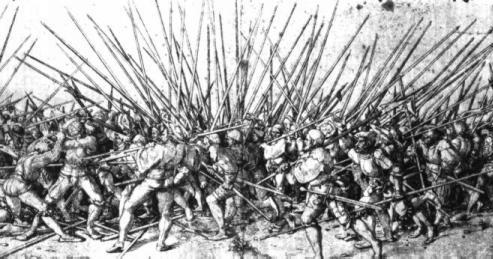
The Peasants' War was one of the unintended consequences of Luther's writings, and had a radical impact on the lives of millions. 

            In Luther’s age, the church was a political machine, often separate from the religious principles it was founded upon. I can’t help but admire Luther’s conviction and bravery in standing up against such an immensely powerful entity, especially considering the consequences at stake. By taking on the Catholic Church, he also took on the aristocracy and their hold on German lands. He challenged not only the hierarchy of the church, but of society as a whole. I think when the lords and kings of various lands saw that the church was being attacked, they too realized they were guilty of persecution and were in just as much danger. Of course, his attack on political power had just as much to do with religion as his changes in culture.


Pope Leo X and the papacy had complete control over the lives of all Christians, and viewed Luther as dangerous threat to their oppression. 


            Finally, Luther most famous revolution took place within religion itself. Nowadays, it doesn’t seem as radical to believe that a person can have a personal relationship with God without the need for organized religion. In fact, people have this exact belief. However, in the 1500’s, this was a heretical belief. People were killed for believing the church wasn’t necessary, and Luther knew this. His conviction was so great, so resolute, that he could not bear to keep his ideas to himself. When learning about Luther last year, I couldn’t really believe that Luther put so much on the line. Of course, I was familiar with his story and the impact he had on Christianity; however, I was unaware just how much he risked. Although he never intended to create an entirely new faction of Christianity, in doing so he made people believe that they didn’t have to listen to any authority—religious or secular—if they didn’t choose to. And this, I feel, is his greatest accomplishment.


The fate of most heretics was burning at the stake. Luther took this risk when he nailed his theses to the door. 

Above all, Luther made German people proud to be German. Instead of struggling to learn Latin and leaving the Bible and other texts to be translated by an educated few, Luther made it possible for more people to interpret and make their own decisions. This idea of self-determination has continued to exist in modern Germany to this day, and is directly thanks to conviction of Martin Luther. 

Wednesday, September 3, 2014

German Identity


While reading this chapter, I was struck by how often the epoch of German cultural identity occurs in German history. In the chapter we read, the concept in question deals with Germany's desire for a unique identity as it separated itself from the Holy Roman Empire. However, even in the 20th century Germany was still fighting the same battle of identity. After the destruction of Germany following the the Second World War, Germany once again found itself at a crossroads. Last May, I did Rall presentation on this particular period in German history, and was instantly reminded of it as I read this chapter. To summarize, after losing two wars and witnessing the fall, rise, and yet another fall of their nation, Germans were left wondering, "Who are we?" In the span of just a few decades, they had gone from a monarchy, to a republic, to a dictatorship, and in 1945 were once again forced to redetermine what it meant to be German.


Soldier returns home after World War II, only to find it's been destroyed. Where does the German identity go from here?


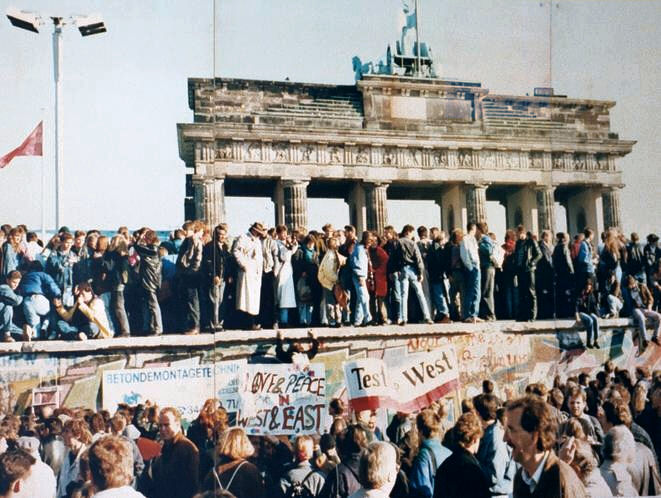
Looking back in history, it's clear that such a question wasn't new to Germans. In the 14th and 15th centuries, Germans were combating the control of the Catholic church in an attempt to determine their own fate. Much like the early years of the American Republic, inner fighting amongst various groups was common as people tried to find some consensus on how to move forward. Of course, most of the fighting only lead to more internal struggle, furthering the divide and making it even more difficult to find a unifying identity. For the Americans, it took a drawn-out, bloody war to finally establish an "American" identity. Germans could very well still be determining their identity. The fall of the Berlin Wall some twenty-five years ago was perhaps the most recent chapter in the search for German identity. In bringing together east and west, along with different ideas of what it means to be German, the country was once again challenged to find some agreement on their collective identity.


Fall of the Berlin Wall: Another challenge for the German identity. 


National identity, regardless of the country, is a long, gradual process that occurs over time and is constantly changing. For Germany and Germans, the development started even before the rise of Christianity and is still happening to this day. However, the seeds that those who called for a change in the organization of German-speaking lands planted many centuries ago have had a profound impact on the modern German identity.

(404 words)

Sunday, June 8, 2014

A Beginning

As a student of the German language since 8th grade, actually taking a trip to the country itself has been a dream of mine for quite some time. Upon entering college I hoped that at some point I'd have the opportunity. When I transferred to North Central last fall, one of the first things I looked into were study abroad courses. As a member of both the cross country and track teams, I was excited when I saw that the school offered courses over winter break that wouldn't interfere with the competition season. Now, just months away from the trip itself, it still hasn’t quite hit me that I’ll be leaving the country for the first time. Then again, I only just applied for my passport a few ago. In any case, I’m excited to finally have this chance. Of course, I’m looking forward to learning and experiencing a lot about German culture and history, as well as improving my language skills. From what I’ve heard from those who have taken the trip in the past, the three weeks we’re there goes by incredibly fast and each day is its own trip in itself. While I’m sure I’ll learn plenty of history throughout the various tours and castles, I do hope to learn more about German people themselves. American media portrays Germans in generally negative, or at least offensive, light—ranging from goose-stepping Nazis to lederhosen-clad overdrinkers, along with others we discussed in our first meeting. I’m often asked why I choose to study such an angry, harsh-sounding language. Apart from being a lover of language, I suppose the real reason is because of the many characteristics and beliefs I share with the German people—despite not having a single drop of German blood in me. I would say that this reason, above all others, is also the reason I’ve wanted to visit Germany for so long. I want to speak with these people and ask what their opinions on certain matters—and then share my beliefs as well. This will not only be an invaluable experience for personal growth, it’ll also be useful later in life as I’m an International Business major in addition to my German minor. Career advancement aside, I really am looking forward to immersing myself in the language and culture, if only to see things from a different perspective for eighteen days. I think it’s absolutely necessary to get out of one’s comfort zone every now and then.  
There's more to Germany than just beer!


Brandenburg Gate: One of Berlin's most well-known landmarks. 

Word Count: 422