To this day Martin Luther remains one of the most-widely
recognized names in the world. His influence is not just contained to the split
in Christianity into Catholics and Protestants, but has also inspired others from
numerous religious and non-religious groups to stand against injustice. To the
people of 16th century Europe, and, more specifically, those from
German-speaking lands, Luther was the catalyst who triggered a wave of
cultural, political, and religious revolutions, whose effects can still be
observed to this day.
Luther’s
impact on the culture of the times was nothing short of dramatic. Living in a
feudal system that directly mimicked the relationship peasants were supposed to
have with God, many people believed they were simply destined to suffer through
life and to take orders from without question. By providing the inspiration for
peasants to challenge this way of thinking, Luther suddenly had numbers far
greater than he expected on his side—albeit, unintentionally. However, I believe
that without the huge response of the peasant class to his writings and
beliefs, Luther may not have seen the changes that occurred in the early 16th
century. By putting the word of God into the word of the people, he cut out the
need for the church. The peasant wars were an ironic consequence of Luther’s philosophy;
however they made dramatic social change possible, which makes them all the
more important
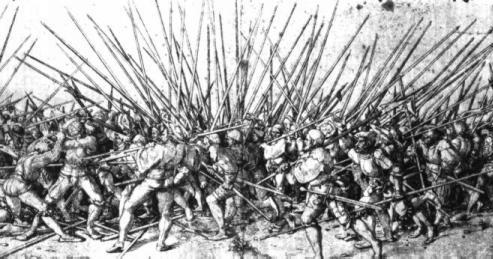
The Peasants' War was one of the unintended consequences of Luther's writings, and had a radical impact on the lives of millions.
In Luther’s
age, the church was a political machine, often separate from the religious principles
it was founded upon. I can’t help but admire Luther’s conviction and bravery in
standing up against such an immensely powerful entity, especially considering
the consequences at stake. By taking on the Catholic Church, he also took on
the aristocracy and their hold on German lands. He challenged not only the hierarchy
of the church, but of society as a whole. I think when the lords and kings of
various lands saw that the church was being attacked, they too realized they
were guilty of persecution and were in just as much danger. Of course, his
attack on political power had just as much to do with religion as his changes
in culture.

Pope Leo X and the papacy had complete control over the lives of all Christians, and viewed Luther as dangerous threat to their oppression.
Finally,
Luther most famous revolution took place within religion itself. Nowadays, it
doesn’t seem as radical to believe that a person can have a personal
relationship with God without the need for organized religion. In fact, people
have this exact belief. However, in the 1500’s, this was a heretical belief.
People were killed for believing the church wasn’t necessary, and Luther knew
this. His conviction was so great, so resolute, that he could not bear to keep
his ideas to himself. When learning about Luther last year, I couldn’t really
believe that Luther put so much on the line. Of course, I was familiar with his
story and the impact he had on Christianity; however, I was unaware just how
much he risked. Although he never intended to create an entirely new faction of
Christianity, in doing so he made people believe that they didn’t have to
listen to any authority—religious or secular—if they didn’t choose to. And
this, I feel, is his greatest accomplishment.

The fate of most heretics was burning at the stake. Luther took this risk when he nailed his theses to the door.
Above all,
Luther made German people proud to be German. Instead of struggling to learn
Latin and leaving the Bible and other texts to be translated by an educated
few, Luther made it possible for more people to interpret and make their own
decisions. This idea of self-determination has continued to exist in modern
Germany to this day, and is directly thanks to conviction of Martin Luther.

No comments:
Post a Comment