While reading this chapter, I was struck by how often the epoch of German cultural identity occurs in German history. In the chapter we read, the concept in question deals with Germany's desire for a unique identity as it separated itself from the Holy Roman Empire. However, even in the 20th century Germany was still fighting the same battle of identity. After the destruction of Germany following the the Second World War, Germany once again found itself at a crossroads. Last May, I did Rall presentation on this particular period in German history, and was instantly reminded of it as I read this chapter. To summarize, after losing two wars and witnessing the fall, rise, and yet another fall of their nation, Germans were left wondering, "Who are we?" In the span of just a few decades, they had gone from a monarchy, to a republic, to a dictatorship, and in 1945 were once again forced to redetermine what it meant to be German.

Soldier returns home after World War II, only to find it's been destroyed. Where does the German identity go from here?
Looking back in history, it's clear that such a question wasn't new to Germans. In the 14th and 15th centuries, Germans were combating the control of the Catholic church in an attempt to determine their own fate. Much like the early years of the American Republic, inner fighting amongst various groups was common as people tried to find some consensus on how to move forward. Of course, most of the fighting only lead to more internal struggle, furthering the divide and making it even more difficult to find a unifying identity. For the Americans, it took a drawn-out, bloody war to finally establish an "American" identity. Germans could very well still be determining their identity. The fall of the Berlin Wall some twenty-five years ago was perhaps the most recent chapter in the search for German identity. In bringing together east and west, along with different ideas of what it means to be German, the country was once again challenged to find some agreement on their collective identity.
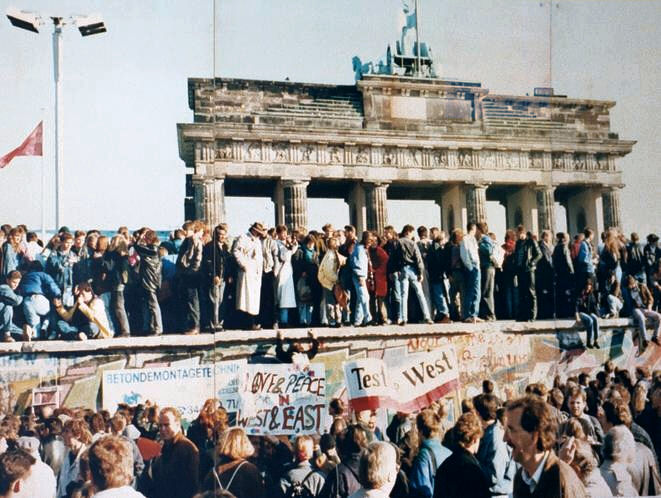
Fall of the Berlin Wall: Another challenge for the German identity.
National identity, regardless of the country, is a long, gradual process that occurs over time and is constantly changing. For Germany and Germans, the development started even before the rise of Christianity and is still happening to this day. However, the seeds that those who called for a change in the organization of German-speaking lands planted many centuries ago have had a profound impact on the modern German identity.
(404 words)

No comments:
Post a Comment