The
German identity changed rapidly during the 20th century. Germans found
themselves constantly having to change their self-image and concept, as the
world around them changed and forced them to alter their perceptions of
identity. From its earliest history, the people who viewed themselves as
Germanic have been resilient in their path to finding a unified identity, and
encountered many small steps along the way that slowly constructed the idea of
"German". With the unification of Germany in 1871, this journey took
a very sudden leap forward. Suddenly, an area that was once comprised of a
number of small, independent kingdoms became a unified nation under a monarch.
For the Germans, this created a new sense of belonging because for the first
time in their history they were united as one nation. This sense of pride was
challenged when World War I broke out. When Germany was on the losing side of
the war, it truly crushed the people's self-concept. Furthermore, the severe
punishment set forth by the Treaty of Versailles only made the situation worse.
As the "aggressors", Germany was forced to pay heavy reparations and
soon found itself completely bankrupt. The resulting hyper-inflation that
plagued the Weimar Republic greatly damaged the nation's sense of pride and one
resounding cry was, "If we are so great, then why are things so bad?"
The resulting effect was that Germans lost faith in both their government
and themselves, meaning that once again, Germans were struggling to find an identity.
Before, they could look to the head of the monarchy as symbol of German values
and integrity, but with how poorly things were going in the country at the
time, they could not look to their new democratic government with the same
feeling. As a result, they begin looking for other sources of unification.
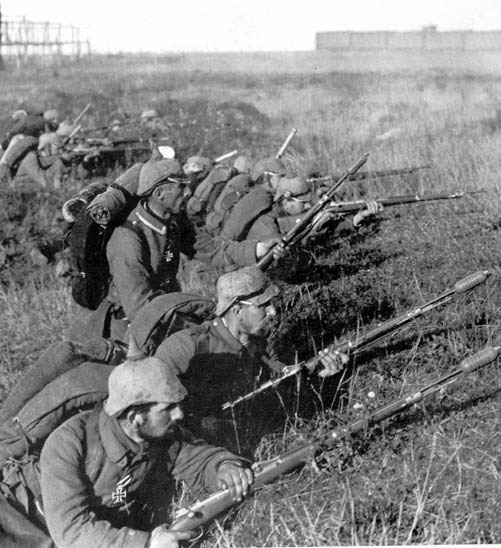
German soldiers in World War I.

Hyper inflation in the Weimar Republic made paper money worthless.
Adolf Hitler recognized the Germans’
anger with the government for the war and for how poorly things were, and
focused his rise to power on those ideas. For the Germans, having a new source
of inspiration to look at as a symbol of German identity caused many to regain
hope in the country. It wasn’t so much that they necessarily agreed with
everything Hitler said, but having blamed assigned to a group for all of
Germany’s problems was easy to along with. Germans in the 1930s were not bad people;
they were just desperate for someone to solve their problems. The rise of the
Third Reich once again restored the Germans faith in themselves and their
country, and made them proud once again to be Germans. It’s easy for us to
condemn them nearly a century later, but considering everything they had gone
through it’s understandable—scary, but understandable.

Adolf Hitler's passionate speeches captivated many.

Hundreds of thousands came out for his rallies.
Once again, war destroyed the Germans
sense of identity. After World War II, however, things were much worse. Extreme
loss of life and the destruction of their country, along with the psychological
effects of losing another war, caused Germans to feel completely lost and
abandoned. Literature of the time reflected this notion, noticeably in what was
known as “debris literature”, which reflected both the physical and mental
destruction of Germany. It wasn’t until the early 1950s that the country was
able to start improving, and even then had to deal with the founding of East Germany.

Entire cities were completely destroyed during World War II.
Even in modern times, German identity is
still being forged. Since the fall of Hitler and the Third Reich, patriotism and
outward national pride have been avoided, so not to make the same mistakes
again. As a result, German identity is still very difficult to define. But even
though the Germans may not demonstrate their national identity the same way we
might do so in America—flag waving, chanting, singing, etc.—they still have
sense of pride that cannot be ignored. By taking ownership for their past and
accepting the responsibility as a nation, Germany has demonstrated perhaps the
most important qualities of their national identity.


No comments:
Post a Comment