The modern
German state as we know today is largely a product of relatively recent events,
including the fall of the Berlin Wall in 1989. However, the roots of the German
nation and identity were formed several hundred years before during the time of
the Holy Roman Empire. As the reading indicates, when the empire was officially
dissolved in the early 19th century and reorganized by Napoleon as
the Confederation of the Rhine, the path towards a German nation was set amidst
the clash of nationalism and liberalism. After the defeat of Napoleon in 1815,
Germany was organized into the German Confederation. People living there began
to feel increasingly nationalistic and wished to unify the German states in
order to make them stronger and more resistant against foreign attacks, which
lead to revolts in 1848. At the same time, the state of Prussia had become increasingly powerful throughout the 18th and 19th
centuries, and would have a tremendous impact on the development of the
German state.

Depiction of 1848 revolts.
One central
figure that comes to mind when considering German unification is Otto von
Bismarck. As a Prussian minister, Bismarck had tremendous influence on German
politics at the time and strongly advocated for a unified Germany throughout
the 1850s and 1860s. Through aggressive diplomacy, including his famous “Blood
and Iron” speech, and various military exploits, primarily against Denmark,
Austria, and, ultimately, France, Bismarck furthered Prussia’s strength and
status on the world stage and demonstrated the benefits of a unified Germany. The
aforementioned war with France, the Franco-Prussian war, was a result of
tensions between the two countries, including resentment over French occupation
of German lands during the Napoleonic wars. France was ultimately defeated in
September of 1870, and Germany was officially unified in 1871 with Wilhelm I as
Kaiser.
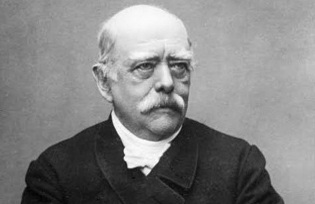
Otto von Bismarck
A necessary
component of the path towards German unification was the need for a German
identity. Due to the vast number of German states, each with unique customs and
culture, finding a sense of national pride and unity proved difficult for much
of Germany’s early history. However, even at the very beginning of the Middle
Ages, people living in German-speaking lands began to find a sense of identity.
In fact, language itself played a pivotal role in uniting Germans. Chlodwig,
the first German king, began making his people speak the same dialect of
German when he was corwned in the 5th century. A common language proved highly effective in establishing the first
sense of what it meant to “German”. Other kings, notably Charlemagne, went on
to exert their influence on the shaping of the German identity as well. For
example, Charlemagne’s creating of the Holy Roman Empire created a sense of
German pride, and, although the Empire included lands other than the modern
German state, it became a symbol of pride for the Germans and was the first
large, unifying power they were a part of.
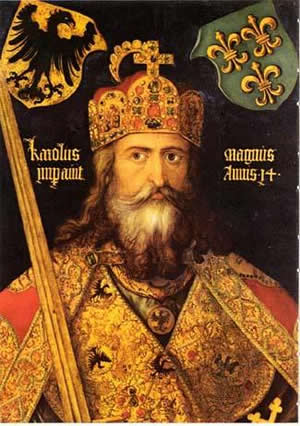
Karl the Great, or Charlemagne
Martin
Luther also had a tremendous impact on German identity through his fueling of
the Protestant Reformation. By both translating the Bible into German and
demonstrating that people can fight against an unjust central power, Luther, rather
indirectly, encouraged Germans to resist injustice and stand up for their
fundamental rights. Protestantism, along with its ideals, is an extremely important
aspect of German identity to this day and still influences how the people of
Germany react to and view the world.

Martin Luther
As
Americans, we can somewhat relate to complicated story of finding a national
identity. Though Germany was inhabited long before the United States was
settled by Europeans, the fact it only became a modern state in the late 19th
century shows that its identity as a country is just complex as ours. We too
had to combine a melting pot of different cultures and beliefs, and combine
that with shared beliefs and experiences to create our identity. And, like the
Germans, events that happened long before our lifetimes still have an impact on
our identity, whether we’re aware of them or not.

